

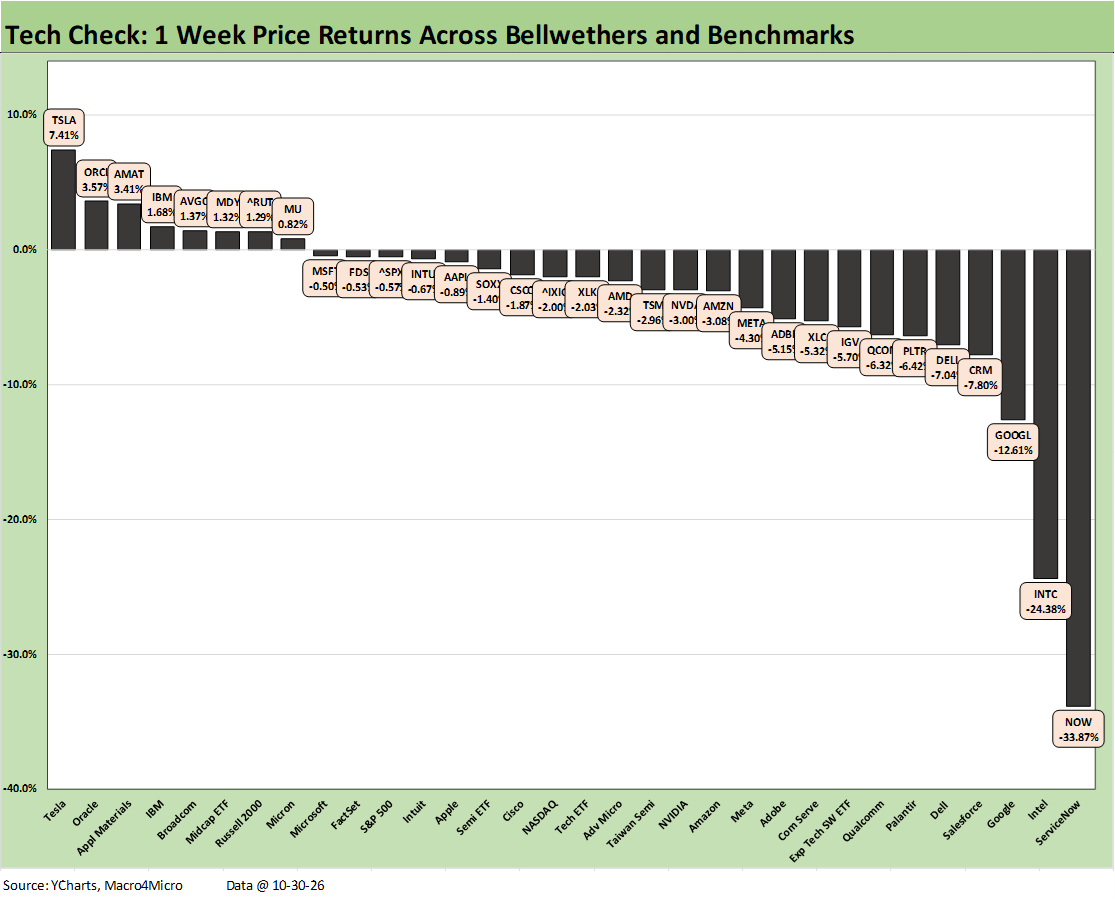
The 8-24 score on our Tech Check list almost tells its own story, but there have already been blaring headlines. A handful of outliers draw the headlines, and a median of -2% is not a crisis. It is an early warning system.
News flow had triggered bellwether reassessments (e.g. Alphabet, Intel) while recent AI fears reflect anxieties over revenue and cash flow assumptions. The range of concerns have spread to credit market access or funding costs that overlap with FOMC policy.
Capital markets concerns are evident in the Anthropic IPO handicapping (size, price, timing) while OpenAI has reportedly dialed back ambitions for funding. The economic interconnectedness of the AI-related capex boom gets a lot of focus with the more pejorative term “circular” used occasionally. The concept of “one man’s capex is another man’s revenue” was addressed back in the vendor financing days of the tech/telecom bubble which peaked with the NASDAQ in early 2000. The larger scale of the multiplier effects today (construction, power, materials, etc.) were seen when Caterpillar stock briefly tanked despite excellent 3Q26 earnings.
Inflation pressure sees oil (WTI) at a $104 handle (vs. a $91 handle in early Oct) and high PCE inflation numbers running ahead of wage growth this week. UST rates rallied again (see PCE Sept 2026: Inflation, Income & Outlays 10-29-26, Weekly UST Deltas: Flight Effects vs. Inflation 10-25-26).
The fallout from inflation (CPI at 3.7%, PCE at 3.6%) is damaging to the cost of capital and real wages (see Employment Cost Index Sept 2026: The Lag Effect 10-30-26).
Even with long-dated UST lower, residual fears of inflation or stagflation would fall hard on tech growth stories and could undermine rebounds. The UST rally sees a mix of subjective variables such as sector rotation, flight to quality, and taking chips of the table. There can be overt or closet fears of slowing growth – even in a week where very strong GDP was reported with PCE growth healthy and fixed investment in a rare zone (see 3Q26 GDP: Happy Days? 10-29-26).
The laundry list of “sentiment shakers” is growing. Capex and free cash flow is a focal point. The only worry worse than too much capex would be a cut in capex. That is a tough balancing act for the AI trade.
Triggers can come with simple setbacks in earnings and guidance, but smaller events can be extrapolated into doubts over bullish assumptions that underpin the valuation of “anything AI.” The AI ecosystem can get targeted in pieces (semi manufacturing, potential AI IPO results, software/SaaS business model erosion, etc.). We have seen all of that recently. There are a lot of moving parts and risks to handicap.