

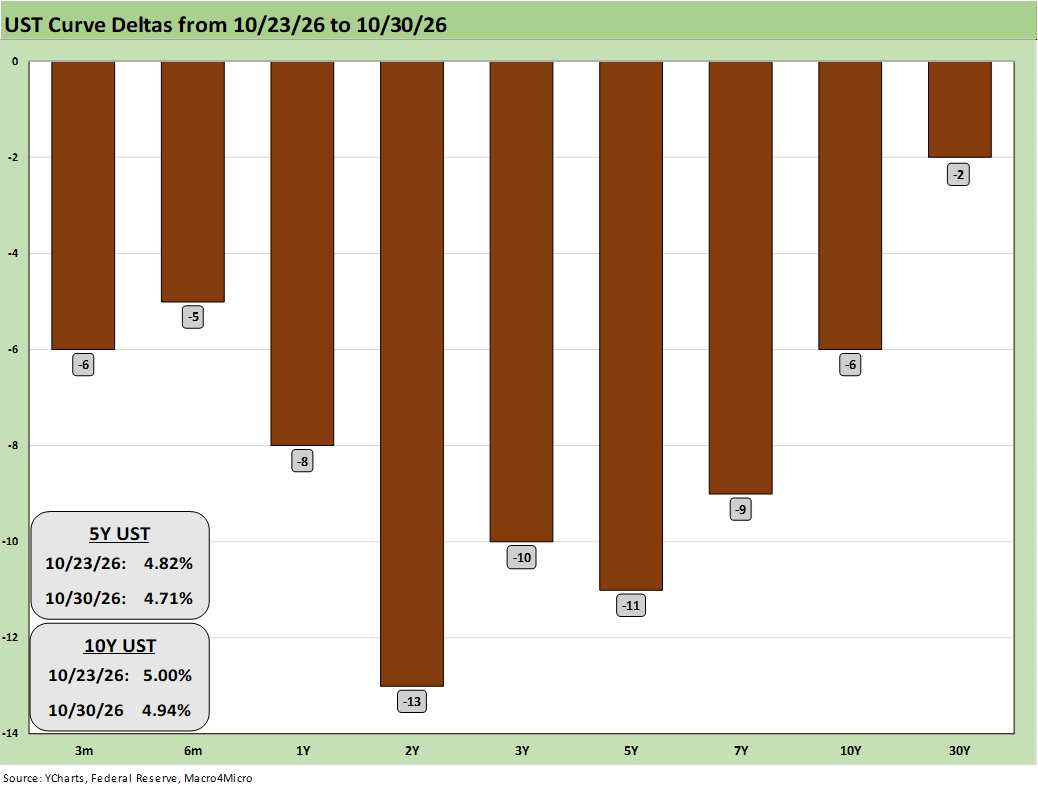
The chart highlights that the yield curve remains on a downward trajectory with a bull steepener this week coming off the FOMC “hold” and the usual vague and relatively useless comments that are now part of the new Fed Chair’s post-meeting routine. The FOMC handicapping is what drives the 2Y UST, and the short maturities moved more as part of another round of declines in the 2Y to 10Y this past week.
Mortgages also made a modest move lower to 7.27% on Friday (Mortgage News Daily survey) after a decline in the Freddie Mac benchmark on Thursday to 7.24% from 7.32%. The Freddie rate is well above the year-ago rate of 6.17%. The reality is still that a 7% handle on mortgages remains a major headwind for both new home sales and the much larger existing home sales market.
One theory in handicapping the next FOMC move is that the vote might be more guarded around tightening actions if the AI and tech boom start to get reeled in and falls into a sustained bear market. The idea is that market weakness would increase downward pressure on the massive capex wave. If capex gets dialed back and market turmoil gets worse, that could potentially undermine the consumer sector and PCE growth and hit employment.
Among potential trigger events could be a disappointing Anthropic IPO or slower/lower funding plans over at OpenAI. The worry around the mega tech names dialing back capex would suddenly shift market worries from too much capex and negative free cash flow to concerns that lower capex would signal that the “magic is fading” for unlimited AI potential. The half-empty crowd might see less conviction and diminished multiplier effects in the broader economy.
In the meantime, PCE inflation was unfavorable this past week and GDP was impressive across a range of lines (see 3Q26 GDP: Happy Days? 10-29-26m PCE Sept 2026: Inflation, Income & Outlays 10-29-26).
Stock market performance is not part of a dual mandate, but that reality never stopped Greenspan in the early 1990s or 2001 as the tech bubble imploded. We have looked at those periods in other commentaries (see Greenspan’s Last Hurrah: His Wild Finish Before the Crisis 10-30-22, UST Moves: The 1990-1991 Risk Factor Pig Pile10-24-23).
Bubbles often lead to a blurred adherence to Fed dual mandates with an excuse to ease not hard to find and can be rolled up under the mandate. For now, the financial conditions as reflected in the UST are not “doing the Fed’s work for it” as it might have been earlier when rates climbed.
We have seen some commentary that a strengthening economy and inflation threat was a major mistake by Powell in 2021, and it might be unfolding again. If the FOMC does not respond to any protracted market weakness tied to AI, you can be assured Trump will be on the warpath.