

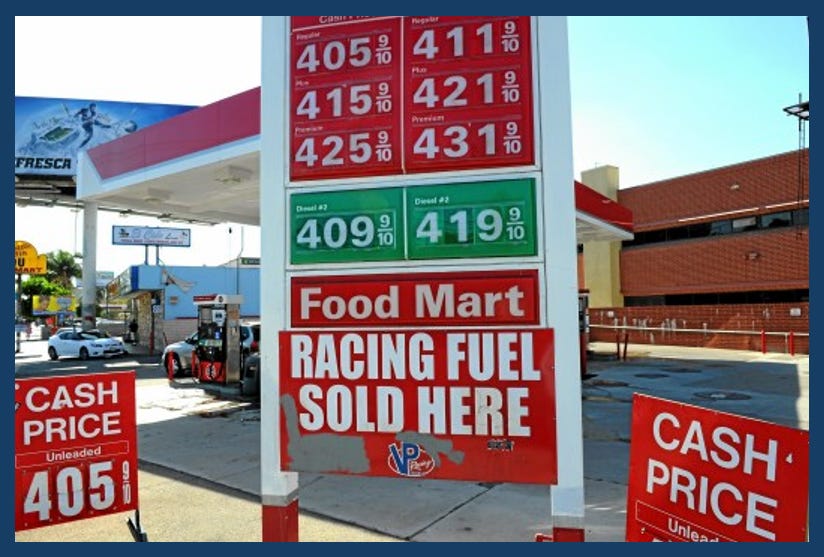
With a AAA national average regular gasoline price of $4.06 today (+36% in 1 month) and food feeling broad inflationary pressures, ADPs release showing real wage growth and more jobs will be a good signal if it can be sustained. The ADP wage growth numbers included +4.5% for “job stayers” and +6.6% for “job-changers.”
The ADP private sector jobs numbers were constructive at +62K on the back of a solid growth rate in the South (+101K) while the Northeast (-29K) and Midwest (-26K) were both in negative range with modest positive growth in the West (+26K).
The half empty view is Manufacturing jobs were down by -11K with Construction (+30K) and Natural Resources/Mining (+11K) carrying the ball for the Goods sector (+30K). The market is still waiting for those tariff-driven manufacturing jobs. JOLTS also raises question on manufacturing jobs (see JOLTS Feb 2026: Openings Down, Hires Down, Layoffs Up 3-31-26).
We see some good news in the small business job count with the small establishment tier of 1-19 employees at +112K. Overall, Services comprised 32K of the 62K total with Goods at +30K.
The UST rally this week combined the tailwinds of hope for “peace breaking out” in Iran with all the very unpredictable moving parts that come with that scenario. History will not be kind to those who think they can predict the behavior of Trump while Iran’s reactions come with the wildcard of religious fanaticism and rage at the saturation bombing. Iran’s unpredictability comes with the innate capacity to endure suffering and holding the line against the “Great Satan” and infidels.
We are not sure day-to-day misinformation helps ease the challenges of interpreting Trump or Iran, but the jobs mandate for the FOMC is still waffling as investors juggle their assessment of energy-driven cost pressures flowing into inflation and the payroll risks. The scale of the supplier chain disruptions and multiplier effects make the opening of Hormuz the overriding X factor for inflation and cyclical scenarios, but those play out at a lag.
In the meantime, we have new, pending (and immediate) threats of attacks on tech companies (18 companies) and their operations in the Gulf. Iran has one eye on the stock market also. A fresh round of back and forth could see Trump pull the plug and tell the rest of the world “all yours.”
Then there is Houthis risk and the vulnerability of oil and freight to Red Sea attacks. Even Shiite militias in Iraq get invoked by those making risk checklists. Those factors can work their way into roll-your-own scenarios for global and regional cyclical pressures, cost threats, and how that all plays into stagflation risk.
With WTI at just under $100 as we go to print, the good news is that the US has plenty of oil and gas, so this is not the late 1973 backdrop or 1979. Both saw stagflation follow. That lack of comparison to the Arab Oil Embargo period in the US is not the case for Asia, who face threats that take us back to our memory of odd-even license plate gasoline rationing of early 1974. We were ringside for that one. Europe, the #1 trade partner for the US, is also in a bind even if not as severe as Asia.
Consumers drive economies, and the challenges to household discretionary cash flow will roll into both domestic growth and trade. Whether the pressure will pick up on US employment and reshape FOMC monetary policy remains part of a wider range of outcomes. Iran is part of the cart-and-horse handicapping by the Fed in our view. It is not chicken and egg since Iran remains the main event.
We get the full March payroll numbers on Good Friday.