

Slow down guys. We need lower mortgages.
Home starts ticked higher sequentially but are down YoY with mortgage rates remaining uncomfortably above the 7% threshold.
Permits are an unfavorable leading indicator at this point in total and for single family.
A sequential increase in starts is always a good thing, but the weight of the top down macro variables still spell trouble for a stagnant housing sector.
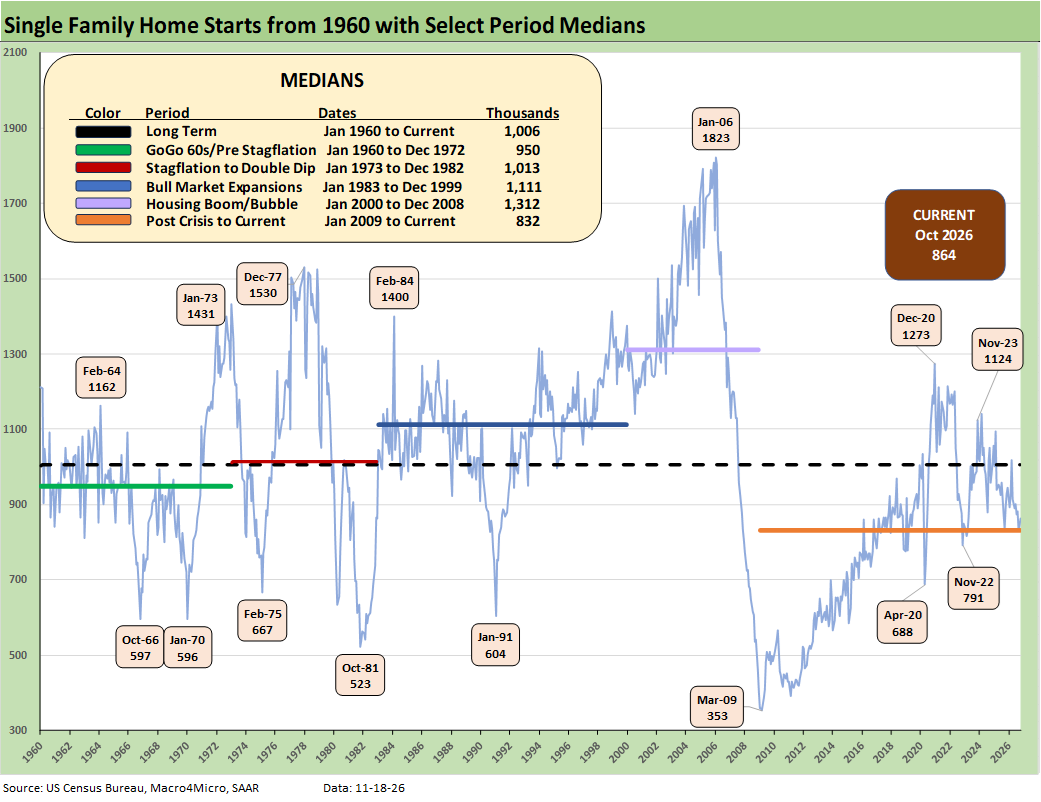
The above chart offers a clear reminder of the wild single family residential construction cycles across the decades. With favorable demographics for housing demand, the current starts run rate of 864K is still well below the long-term median of 1006K and below all the timeline medians posted above except for the post-crisis (post-Jan 2009) median.
The current backdrop includes mortgage rate pressure that has gotten worse over the past 2 weeks with a move to 7.5% (7.45% in Mortgage News Daily today as we go to print), and that just keeps the headwinds blowing (see UST, Mortgages, and Existing Home Sales: All News is Bad News 11-15-26).
New home prices are easing in 2026 as reported by the builders, but the monthly payment burden is the main event undermining affordability. The ASP pressures for the homebuilders from 2025 to 2026 does not change the reality of the post-COVID spike in home prices. We get a fresh round of new home sales data next week.
The yield curve pain and zero odds of easing come after mortgage rates had flirted briefly with crossing below the 6.0% line in Feb 2026, just before the Iran War. The misfire in Iran fell prey to “Geopolitics Amateur Hour” with visceral war planning and advice from an inner circle of real estate “friends and family” rather than regional experts and experienced diplomats. The voters made their views clear.
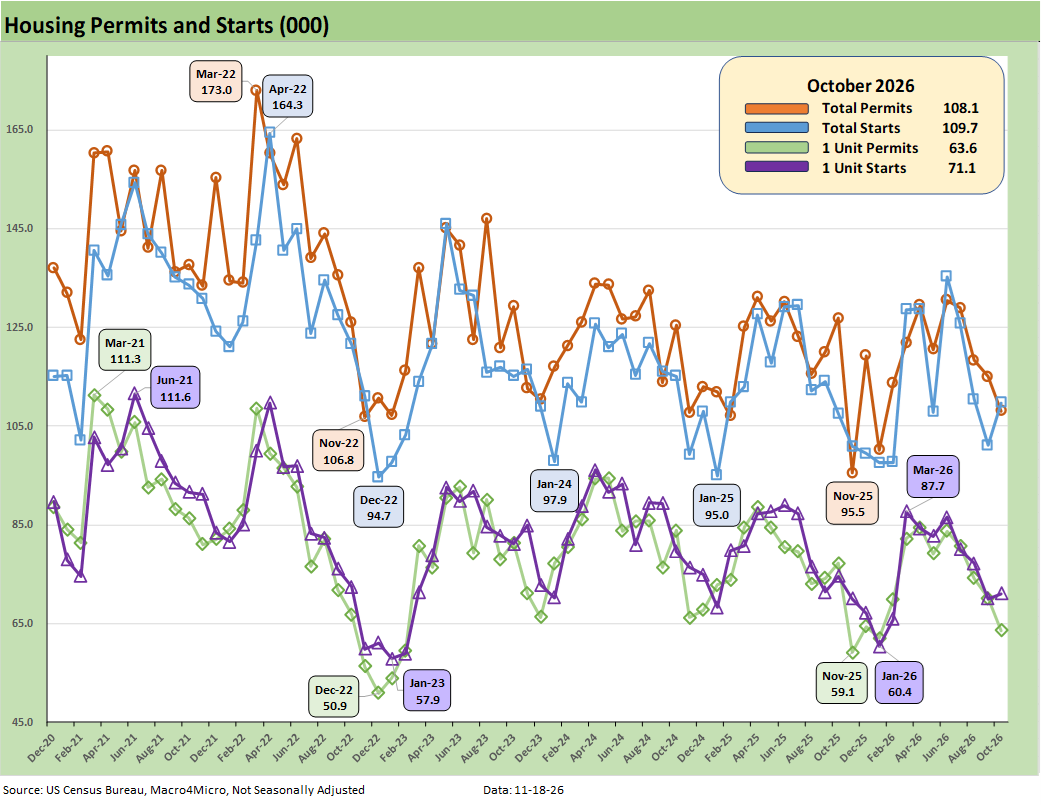
The above chart plots total and single family starts and permits on a Not Seasonally Adjusted (NSA) basis. NSA is viewed as closer to what is going on in the trenches without the SAAR model assumptions.
For Oct 2026, we see NSA total permits -14.8% lower YoY. Single family permits were lower by -17.6% YoY. Total permits were -6.0% lower MoM with single family permits lower by -9.3% MoM.
For total starts and single family starts on an NSA basis, we see total starts down by -2.1% YoY and higher by +8.5% MoM. For single family NSA starts, the YoY deltas were lower by -4.7% while MoM was higher by +1.6%.
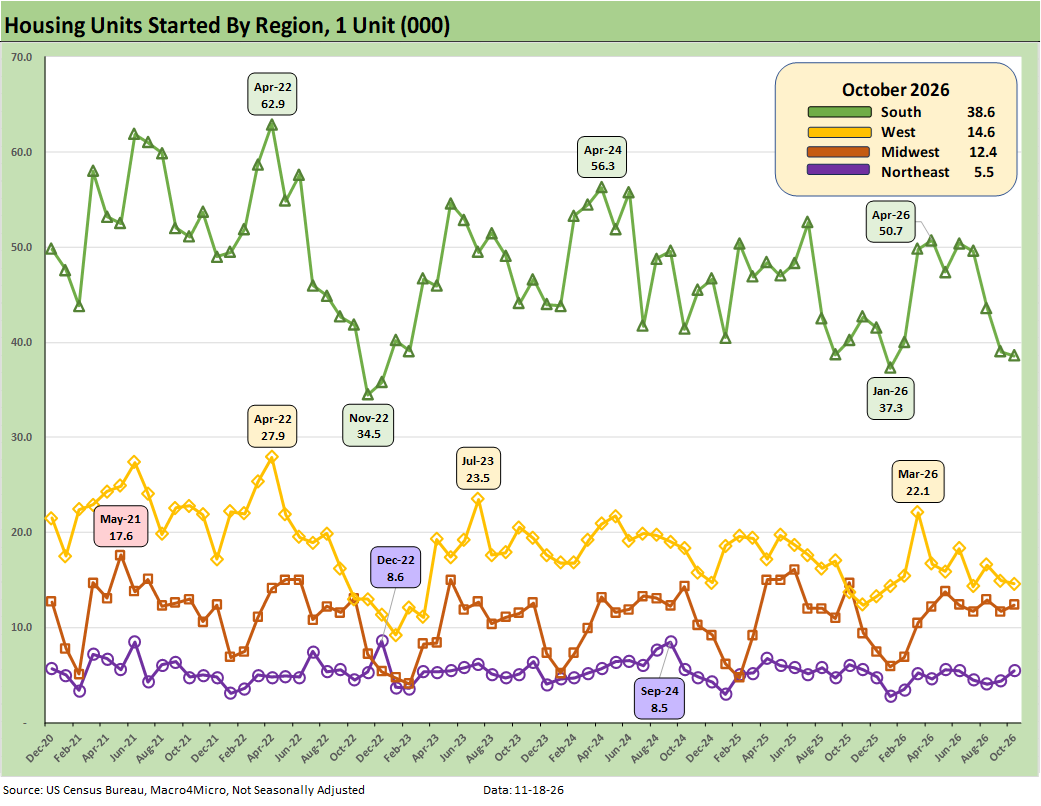
The above plots the single family starts by region (NSA). On a MoM basis, the critical South region (55.0% of total NSA starts and 54.3% of single family starts) was down in single family by -1.0% MoM and down by -4.0% YoY.
The West as the #2 single family market (21% of total) was down by -2.0% MoM. The Midwest region MoM in single family was +6.0% with the small Northeast market at +25% MoM.
For YoY NSA starts, the South was -4.0%, the West was +6.6%, the Midwest was -15.6%, and the Northeast at -9.8%.
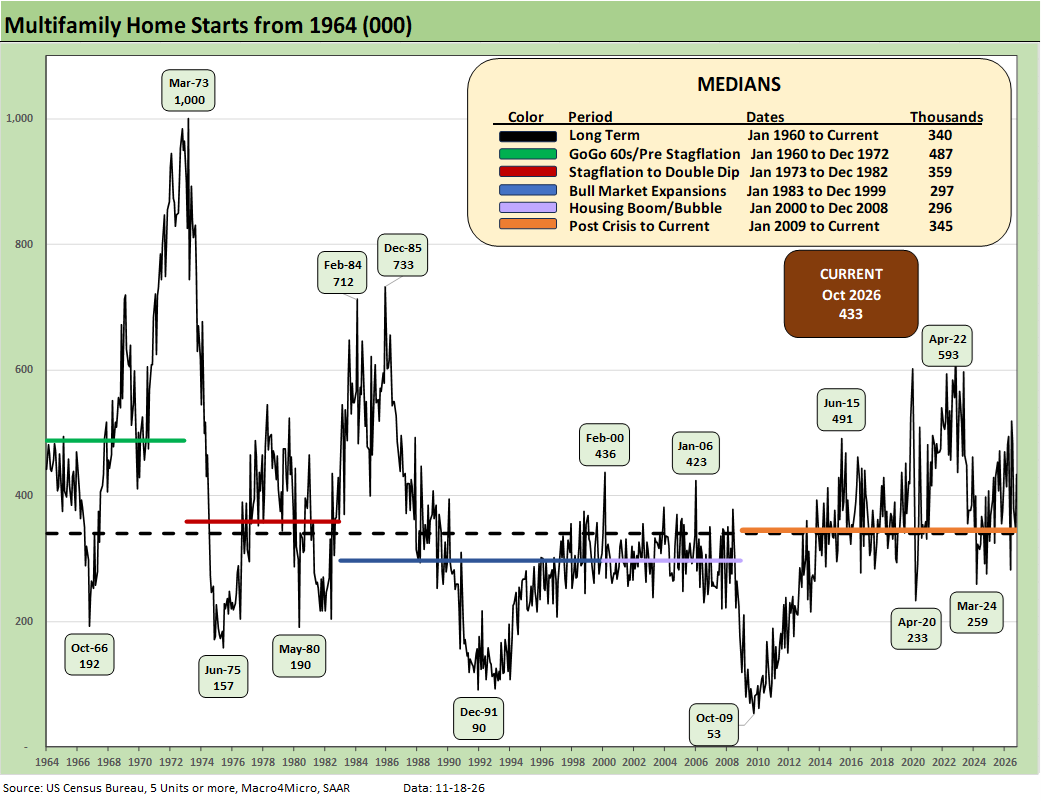
The above chart updates running multifamily starts. At +433K (SAAR) for October 2026, multifamily starts increased by +25.5% MoM from Sept. For YoY, Multifamily rose by +22.0%
The 433K for Oct is well above the long-term median of 340K but below the highest timeline median from Jan 1960 to Dec 1972 of 487K. That 1960-1972 period was when the urbanization boom was ongoing.
The 1960s was a period of explosive growth for multifamily with the back end of the baby boom, the postwar rise of urbanization, and the high racial migration from the South to the North all part of the multifamily tailwinds. Immigration also played an important role.
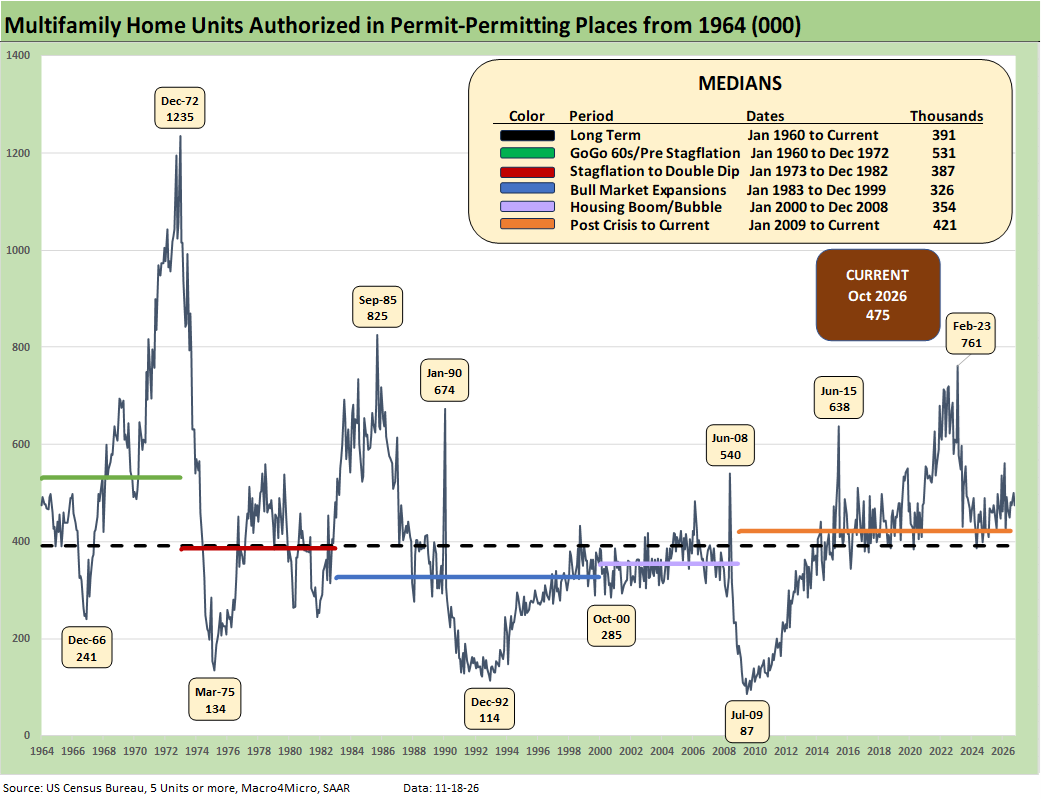
The above chart updates Multifamily permits (SAAR). The 475K in Oct 2026 multifamily permits declined by -5.2% MoM and was down by -0.4% YoY.
The bottom line on home starts as we move further into the peak selling season is that 2026 was clearly shaping up as a mediocre year at best for homebuilders. The year is in the process of wrapping up that way with mortgage rates high and buyers cautious.
The demographic needs for a lot more housing and more affordable housing is a well-traveled theme, and there is not much room for optimism heading into early 2027.