

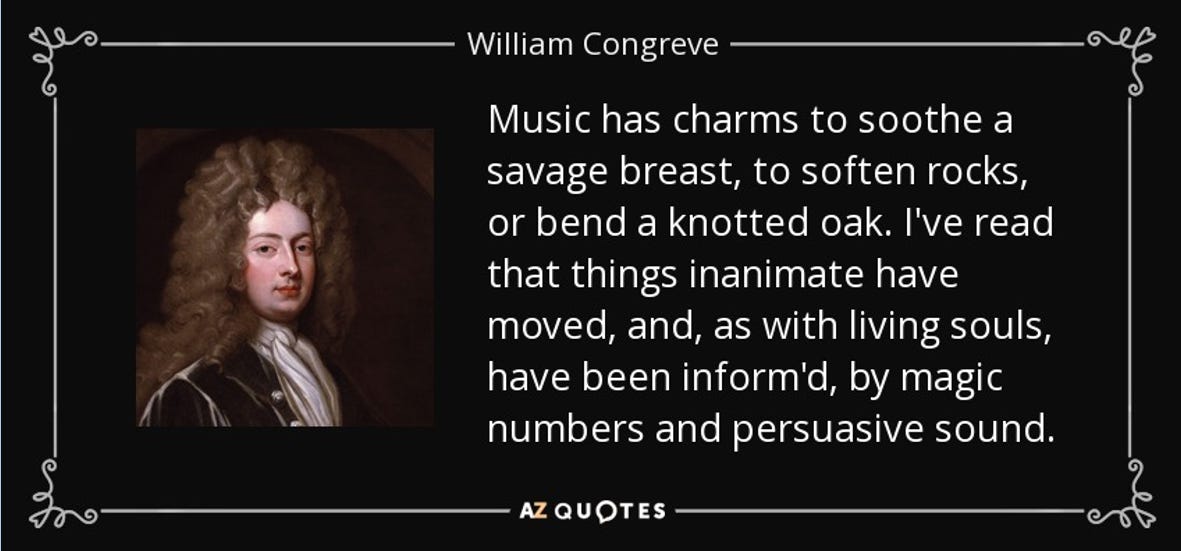
We put together a brief playlist that harkens back to some earlier periods of political and social disarray. Here we go again.
The songs offer historical perspective on the good, the bad, and the ugly of some volatile decades and provide a reminder that it takes time, effort and endurance to work through the process of change and turmoil.
The songs remind us that history, facts, and social currents are real and should not be buried in doubletalk, revisionism, or a pile of propaganda (insert alternative “pile” as preferred).
Below you’ll find a 10-song playlist as food for thought. We line them up by release year.
A Change is Gonna Come (Sam Cooke 1964)
The song captures the hope for civil rights progress and better days as LBJ in the White House raised hopes for desegregation, voting rights, and equal protection under the law. Trump wants to bury that challenging history or at least massively dilute the facts.
Mississippi Goddam (Nina Simone 1964)
Nina Simone was an epic musical talent with a very distinctive soul voice and was also a classical pianist. She was very active in civil rights during turbulent times. In past commentaries, we have covered Black voter suppression in Mississippi and Alabama (among others), as cited in the song. The shockingly low registration numbers before the Voting Rights Act are hard to believe. As we covered before, “Black voter turnout in Mississippi was 29% in 1888, 2% in 1892, and 0% in 1895... Although Mississippi had the highest Black population of any state in the 1960s, only 6.7% of eligible Black voters were registered to vote by 1964.” Nina clearly had the right to use “Goddam” in the title (see The US as an Aspiring Emerging Market: Fiscal SNAFU, Political FUBAR 4-6-26, Martin Luther King Jr.—MLK was a Fact, Not a Theory 1-15-24).
Only a Pawn in Their Game (Bob Dylan, 1964)
Dylan’s voice is an acquired taste for many, but he was a poet of protest. This song flags the practice of pitting poor whites vs. Black people (“the poor white man’s used in the hands of them all like a tool…”) The message is also that the leaders of the “right” want your vote but do not care about you otherwise. Dylan had no shortage of protest songs, but this one seems to capture a core MAGA strategy in current times. The recurring chant of DEI is also part of the usual racist trope (dog whistle?) now used on the right while the left sees the diversity theme diluted as they struggle to counterpunch.
Deportee (Plane Wreck at Los Gatos) (The Byrds 1964, lyrics Woody Guthrie)
This is a song that reminds us that there is a long history of dehumanization of immigrant workers/deportees that make it into poems and songs. Deportee lyrics stem from a Woody Guthrie poem written after a 1948 plane crash in California carrying 28 migrant workers being deported and 4 Americans (the flight crew and a guard). News reports cited the American names but only the term “deportees” for the Mexicans who were buried in a mass grave. That got Woody Guthrie’s blood up as he wrote a poem assigning names in 1948. Music was added in 1958. The press coverage did not reflect well on U.S. Christian values (sound familiar?). After the Byrds in 1964, Springsteen and others would play the song as well.
Eve of Destruction (Barry McGuire 1965)
This one has suddenly picked up relevance with Trump’s apparent compulsion to keep threatening nuclear destruction of Iran and a willingness to drop “Mushroom Cloud #3” in the history of the world after the first two were dropped by the U.S. on Japan. Truman fired MacArthur for less. The destruction goes well beyond geopolitics these days and gets back to the apparent strategy of control by division and hate (in the song, “When human respect is disintegratin’ this whole crazy world is just too frustratin’”).
Fortunate Son (Creedence Clearwater 1969)
This was about Vietnam and how the poor were the ones who were drafted and sent to fight while deferments for college kids kept them out of harm’s way. This song resonates with those who see Trump as the “pretend warrior” with so many deferments before those ran out, but then he caught a mysterious case of bone spurs as diagnosed by a doctor who just happened to be a tenant of his father. Unsurprisingly, the end of college deferments saw the draft end quickly once the “Fortunate Sons” might be at risk. Money talks. The draft was over, troop counts reduced, and the war wrapped up. Saigon fell when my brother and I were in high school, but the voters demanded an end. Lucky for us. Otherwise, who knows what our “high and tight flattop” Marine father would have demanded or expected of us.
Ball of Confusion (Temptations 1970)
As the 1960s came to a close, the Vietnam War had driven mass protests against the war (“hell no we won’t go,” draft card burning, “four dead in Ohio,” etc.). Protests and the use of drugs sometimes also saw violence, especially with widespread racial tension after MLK’s assassination in 1968. World-class riots hit some urban centers. The Temptations’ lyrics and checklist are ones for the ages. Sadly, we revisit many of the same issues in recent years (Mideast Wars, violence by Trump supporters on Jan. 6, George Floyd protests, fentanyl, etc.). As the song states: “Run, run, run…but you sure can’t hide.”
War (Edwin Starr 1970)
This one does not require much of an explanation. Good God y’all.
I Am Woman (Helen Reddy 1972)
This song was played on the radio on my drive to school a thousand times, and it became an anthem for women’s rights after a long stretch of abrogation of rights and sociopolitical mismanagement by the ruling “old white guys.” The Equal Rights Amendment was approved by Congress in 1972 and sent to the states with a seven-year deadline. It needed 38 states; 35 ratified before the original deadline, and no additional states joined before Congress’s extended 1982 deadline. The story did not end there: Nevada ratified in 2017, Illinois in 2018, and Virginia in 2020, giving ERA supporters the 38-state count they argue is enough. Opponents point to the expired deadline and attempted rescissions by five states; as of 2026, the National Archives has not certified or published the ERA as part of the Constitution, so its status remains legally contested rather than settled. These days, the shadow of Dobbs weighs heavily, and the war on women in the military is coming from that slick-haired Christian White Nationalist racist misogynist in the Pentagon who is undermining the advancement of women. This all may require a fresh “We Are the World” style chorus of the Helen Reddy tune—2026 style. The fundamentalist Christian movement is also dividing women as so many face the social pressures and hand-waving religious propaganda on the role of women.
Born in the U.S.A. (Bruce Springsteen 1984)
This song is a natural choice, even though it arrived well after the peak turmoil of the 1960s and early 1970s. Cheering for the working man has long been politically expedient, especially when so many Americans are still struggling to move up economically. The cost of college has become obscene, and the returns on a debt-laden degree can be uncertain. Opportunity in a great country is often promised by politicians who later reveal themselves as narrow-minded, resentful, or hostile to the very people they claim to champion. Those false promises have helped fuel a political ascent built on grievance: say one thing in one room, do little or nothing in the next. When working people cannot find real upside, their anger becomes easy recruiting ground for Trump-style politics, which channels frustration without delivering much in return. Blaming DEI may be the slogan, but it is not a solution. That message may face a harder test in the midterm elections after the 2025–2026 performance, especially if voters decide that the stated priorities did not match the results.
In the end, these songs are not just relics from another era; they are reminders that every generation gets tested by some familiar mix of fear, division, cynicism, courage, and hope. The details change, the slogans get updated, and the villains often arrive in fresh packaging, but the underlying struggles remain stubbornly recognizable: voting rights, women’s rights, war, immigration, racial justice, economic fairness, propaganda, and the exploitation of grievance by those seeking power. Music does not fix any of that by itself, but it can name what people are feeling before politics admits what is happening. It can stir memory, sharpen anger, revive hope, and remind us that change usually comes neither quickly nor politely. So, as the summer heats up, maybe this playlist is less nostalgia than warning label: listen closely, remember clearly, and do not let anyone convince you that the past has nothing to say about the present.
Glenn, thanks for the music! It's always been my experience that a certain song can be my madeleine, taking me right to where I was, when it hit me, how it's continued to work on me. Your list is full of those memories for me. Bring another batch out of the oven when you can, thanks.